

Diplomacy rarely looks dramatic. Most of it is a memo drafted late at night, a consular officer processing a visa, an embassy analyst filing a report on a drought thousands of kilometres away, or a deputy minister taking a meeting that neither side expects to settle anything. The summit handshake is the visible tip of a much larger system that keeps governments talking even when they disagree about nearly everything else.
A relationship between two countries is not fixed by geography or military strength alone. It is built, maintained and occasionally repaired through diplomatic work, much of it procedural and some of it high-stakes. To see how that shapes relations, it helps to look at three things: what diplomatic missions are legally for, how national networks of embassies are distributed, and where negotiation has actually produced agreements.
What a diplomatic mission is legally for
The framework is set out in the Vienna Convention on Diplomatic Relations, adopted in 1961 and in force since 1964. Its Article 3 lists the functions of a mission: representing the sending state; protecting its interests and those of its nationals; negotiating with the host government; finding out what is happening in the host country and reporting on it; and promoting friendly relations along with economic, cultural and scientific ties. Nearly every country in the world is party to the convention, which makes it one of the most widely accepted treaties in international law.
Two details in that list matter more than they first appear. Article 2 states that diplomatic relations and permanent missions exist only by mutual consent, so a country cannot establish a relationship unilaterally. And reporting on conditions in the host state is a formal duty, not an incidental one. That is why an embassy often functions as a government’s most grounded information channel, and why closing one is rarely a neutral administrative decision.

Embassies as infrastructure, not ornament
Where a country places its embassies shows what it treats as strategically relevant. The Lowy Institute’s Global Diplomacy Index tracks these networks, and in its 2024 release, covering 66 countries and territories with data collected between July and November 2023, China held the largest network at 274 posts, followed by the United States at 271.
| Country | Total diplomatic posts | Embassies / high commissions | Consulates / consulates-general |
|---|---|---|---|
| China | 274 | 173 | 91 |
| United States | 271 | 168 | 83 |
| Türkiye | 252 | 145 | 93 |
| Japan | 251 | 152 | 66 |
| France | 249 | 158 | 72 |
Source: Lowy Institute Global Diplomacy Index 2024, data collected July to November 2023. Totals include permanent missions and other representations.
A few rows stand out. Türkiye ranks above several larger economies, reflecting a deliberate expansion of its network. Japan sits close to the leaders despite a network concentrated in Asia and the developed world. And the index’s authors are careful about one limitation: the count is a proxy for investment in diplomacy, not a measure of effectiveness. A large network and a persuasive one are different things.
The distribution is also far from universal. Research on diplomatic representation has found that for much of the period since the Second World War, only about a third of possible directed country pairs maintained representation. Distance, relative power and ideological affinity all appear to influence whether a mission is opened. Embassies cluster where interests are dense: trade, security, diaspora ties, or proximity to international institutions.
Why presence can matter more than ceremony
The practical case for diplomatic presence rests on information and access. A functioning post can raise concerns early, clarify intentions before a misunderstanding hardens, and support the commercial and consular interests of its citizens. Research summarized in the Annual Review of Political Science points to an association between vacant diplomatic posts and higher rates of international conflict and lower levels of trade. That is a correlation rather than proof that empty embassies cause disputes, but it is consistent with the idea that routine contact reduces the odds of a miscalculation.
There is a mundane side to this that rarely makes headlines. Consulates issue visas, assist citizens abroad and support exporters. Embassies host military attachés and trade counsellors. None of it is glamorous, and all of it depends on the relationship being stable enough to allow daily contact.
From two capitals to one room: the multilateral turn
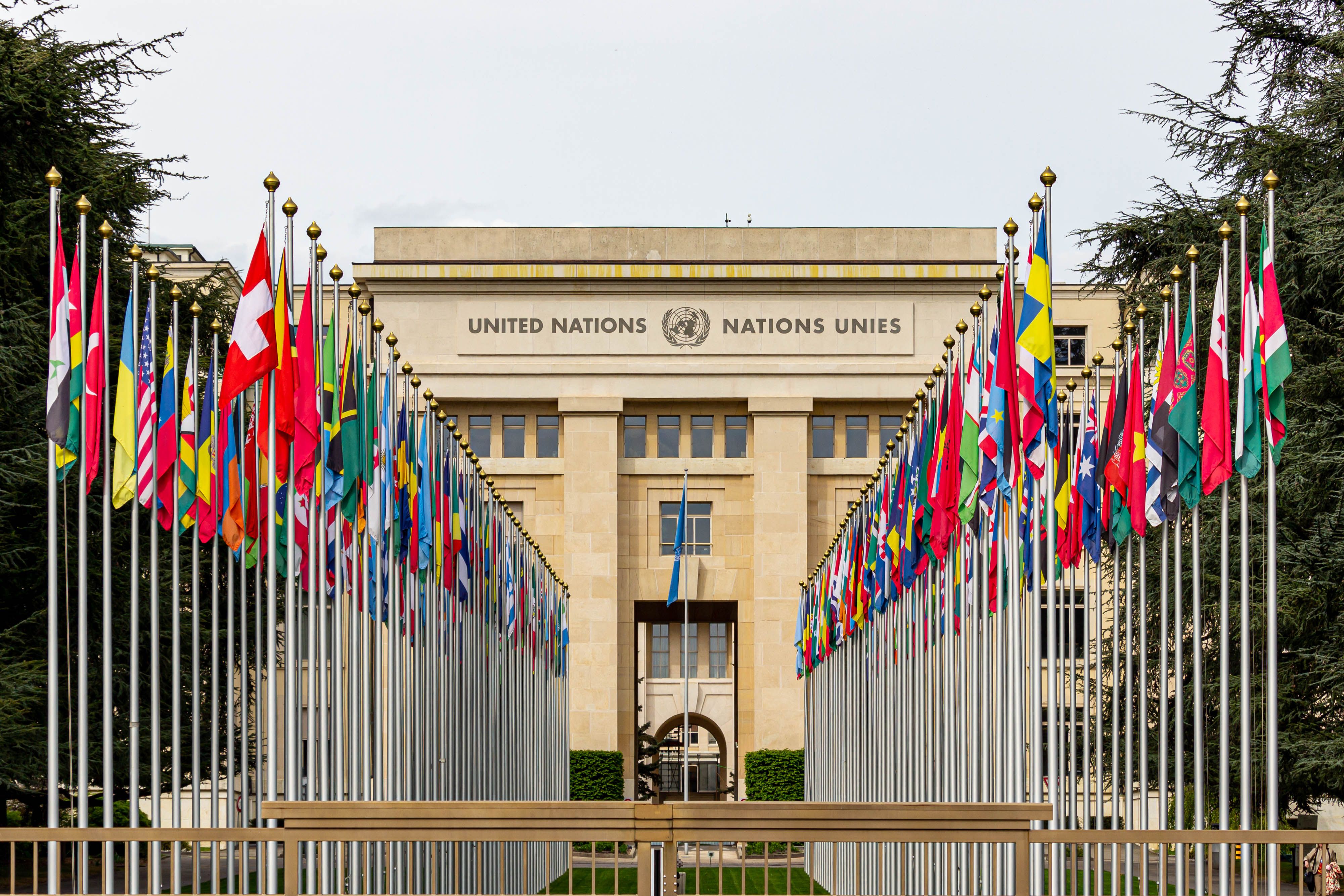
Bilateral channels are only part of the picture. Much of contemporary diplomacy happens in shared institutions, above all the United Nations, which now has 193 member states. Multilateral settings change the dynamics: smaller states can amplify their voice by building coalitions, and agreements can be monitored and legitimised by bodies that no single power controls. They also make diplomacy slower, because consensus among many parties is harder to reach than agreement between two.
Alliances and regional organisations work on a similar logic. When states face a shared problem they cannot manage alone, whether a security threat, a climate risk or a set of trade rules, they tend to coordinate through institutions rather than one-off deals. Diplomacy is the mechanism that turns that coordination into commitments.
Camp David, 1978: what a negotiation process can produce
The 1978 Camp David talks between Egypt and Israel, mediated by the United States, are often cited as a case where sustained diplomacy changed a relationship. The summit was expected to last three days; it ran for thirteen. When direct talks between the two delegations stalled, the mediation team switched to working with each side separately and produced a single draft text that reflected the core interests of both. The framework documents were signed on 17 September 1978, and an Egyptian-Israeli peace treaty followed in March 1979.
Two features of the process are worth noting. The talks were deliberately insulated from daily press coverage, on the theory that negotiators would be more candid without having to tailor every statement to public opinion. And progress came largely through ideas and language worked out with each party in turn, taking twenty-three drafts according to the account kept by the Jimmy Carter Presidential Library, rather than through a single dramatic breakthrough. That is a fairly typical pattern: the visible agreement rests on a long, unglamorous process.
Attraction, credibility and the public
Not all influence runs through formal negotiation. The concept of soft power, developed in the late 1980s, describes the ability to shape outcomes through attraction rather than coercion or payment. In this framing, a country’s soft power rests on its culture, its political values and the perceived legitimacy of its foreign policy. Public diplomacy, from academic exchanges to cultural programmes, is the instrument governments use to reach foreign publics rather than only foreign governments.
Soft power is not a substitute for other tools, and it is difficult to manufacture. Public diplomacy that reads as propaganda tends to fail, because credibility is the very resource it depends on. The same logic applies to how a country’s domestic conduct is perceived abroad: statements about values land differently when they are seen as consistent with practice.
The audience that never leaves
Diplomacy once happened largely out of public view. That has changed. Statements, negotiations and even private messages now surface in public, where they are parsed, quoted and debated within hours. In practice, regional news coverage often turns a single remark into a signal that publics, markets and other governments react to, which gives diplomats a second audience to manage alongside their official counterparts.
This public dimension cuts both ways. It can increase accountability and make a government’s commitments harder to abandon quietly. It can also reward rigid positions, because publics may punish a compromise that negotiators themselves would accept. That tension, between transparency and the room to move, is one of the recurring dilemmas of modern diplomacy.

Where diplomacy stalls
Diplomacy has real limits, and it is honest to say so. It tends to work when the parties see more value in an agreement than in continued conflict, when credible guarantees exist, and when domestic politics give leaders room to make concessions. It struggles under sharp power asymmetries, when spoilers can derail a process, or when enforcement is weak. Some scholars argue that diplomacy mostly reflects underlying power rather than shaping it, and that talks succeed only when the balance of interests already points toward agreement. That view is a useful corrective, though it can understate how much routine contact does to prevent accidental escalation.
The evidence is uneven. Quantitative studies find associations between diplomatic presence and outcomes such as trade, but isolating cause from effect is difficult, because countries tend to open embassies where they already expect to do business. The careful summary is that diplomacy is usually necessary but rarely sufficient on its own.
What diplomacy is really protecting
The machinery described here, from conventions and missions to reporting and quiet talks, exists to keep disagreement from becoming rupture. Most days it produces nothing worth a headline, and that is roughly the point. A relationship that is maintained can absorb a bad week; one that has been allowed to go silent has fewer options when a crisis arrives.
The clearest measure of diplomacy’s value may be the conflicts that never happened, or the ones that stayed arguments. That is hard to count, which is one reason the work is easy to take for granted until it stops.
Frequently asked questions
What is diplomacy in simple terms?
Diplomacy is the practice of managing relationships between countries through communication, negotiation and representation rather than through force. It includes the everyday work of embassies as well as formal talks and treaties.
Do two countries need each other’s permission to have diplomatic relations?
Yes. Under the Vienna Convention on Diplomatic Relations, diplomatic relations and permanent missions are established by mutual consent. Either side can also withdraw, for example by expelling envoys or closing a post.
What does an embassy actually do?
Its core functions are representation, protection of the sending state’s interests and nationals, negotiation with the host government, information gathering and reporting, and the promotion of friendly economic, cultural and scientific ties. Consular services such as visas and citizen assistance are part of the wider mission.
Does a bigger diplomatic network mean more influence?
Not automatically. The Global Diplomacy Index counts posts as a proxy for investment in diplomacy. Analysts caution that network size does not measure effectiveness, and influence depends on relationships, resources and the issues at stake.
Can diplomacy prevent war?
Sometimes. Diplomacy can reduce the risk of miscalculation and create channels for de-escalation, and it has produced major agreements. It is less effective when power is sharply unequal, when spoilers can block a process, or when enforcement is weak, so it is best understood as necessary but not always sufficient.

